
By Chris Cochran
One of my professional development goals is to have a business book of some kind in the reading mix at all times. Mostly I’m successful at that – although there may be a couple of days in between finishing one book and starting the next. One of my organizational development consultant friends would probably suggest I come up with a quarterly reading “plan” to help facilitate this goal.
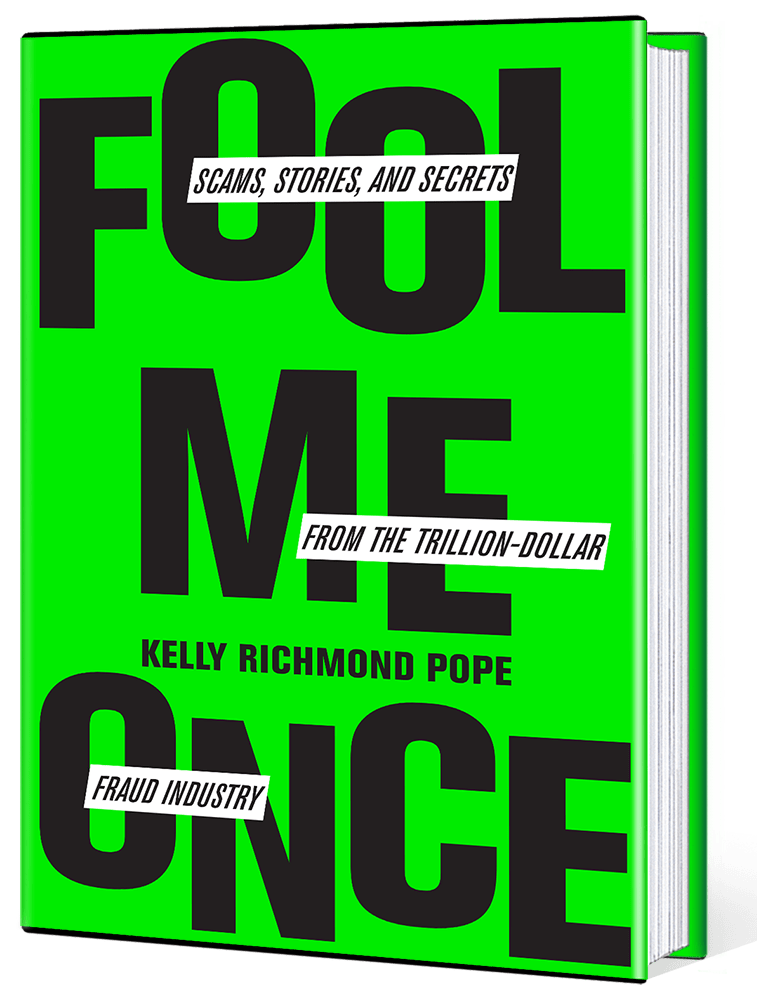
I dove into Fool Me Once by Kelly Richmond Pope recently after coming across a reference to it in one of my daily reading sources. I call it a hybrid business book – published by Harvard Business Review and written by a PhD professor of accounting for both a professional and popular audience. I love reading about fraud cases for both the fascinating, and flawed, personalities involved, as well as for the facts of the cases – following the steps of how the individuals perpetrated their fraud over months or years. I’m always interested in any due diligence failures that might have occurred, and what processes and controls are or are not in place to detect and prevent fraud.
Pope’s book takes a different but related approach. She’s not a journalist like many authors of fraud books (see a sample bibliography of those books at the end of this post) – in addition to teaching at DePaul University, she’s a documentary filmmaker. She examines and studies known fraud cases and analyzes their components, rather than investigating the fraud per se.
Fool Me Once focuses on the web of people involved in various types of fraud, from those who perpetrate fraud, to the people who expose fraud, to the people who are victims of fraud. As she puts it, she’s “fixated on how people cheat, and even more by how they rationalize it.” Through stories of exposed fraud cases she has analyzed, and the stories of fraudsters she has invited to speak to her students, she organizes her book around three categories:
- Perpetrators of fraud – intentional, accidental, or righteous
- Prey, or victims, of fraud – innocent bystanders or organizational targets
- Whistleblowers who expose fraud – accidental, noble, or vigilante
Her stories include some classic examples of fraud, like Rita Crundwell, who stole millions as the city comptroller of Dixon, IL, and is the subject of a documentary film Pope directed. Other stories focus on victims of particular fraud cases and the impact on their lives, and still other chapters look at whistleblowers who exposed fraud and faced varying degrees of repercussions for doing it – sometimes putting their lives in danger.
All in all, it’s highly readable and a fairly quick read, although it could have easily been presented as a longer form article in say, the Harvard Business Review. I feel like an editor along the way may have suggested it get stretched out to book length – for example, Pope drifts into some sidebars dealing with Boeing and Edward Snowden, signs of her broad approach to the subject of fraud. Not everyone may agree with her that Boeing “preyed” on passengers when it initially blamed pilot error for two deadly crashes of its 737 MAX 8 jet. Others may not agree that Snowden was “exiled to Russia” after illegally exposing the existence of illegal surveillance activities by the U.S. and other governments. But on the other hand, an author who is examining issues in a different light should be exposing readers to new ways of looking at things, and in these examinations, Pope has done that.
Other books about notable fraud cases:
Have a favorite book about fraud cases? Please share it in the comments.
 An Inquiring Mind